Accessing real estate records in Clermont County is essential for homeowners, buyers, sellers, investors, and professionals who need accurate and current property data. These records include ownership history, sales information, assessed values, tax charges, land descriptions, and property characteristics.
This 2026 guide explains the most efficient and reliable ways to perform a Clermont County real estate records lookup using the Auditor database, Recorder documents, GIS mapping, and official county tools.
Clermont County Real Estate Records Lookup Tool
Search by Address, Owner Name, or Parcel Number
Search

What Real Estate Records Include in Clermont County
Real estate records are a collection of official documents and data points maintained by multiple county departments. These records provide an accurate picture of property ownership, land value, legal history, and physical details of a parcel.
Common information included in Clermont County real estate records:
- Current owner name
- Property location and parcel number
- Assessed land and building value
- Total market value
- Tax charges and payment history
- Property class and use type
- Acreage and lot dimensions
- Building characteristics
- Transfer history and sale prices
- Legal descriptions and boundary details
Because these records are public, anyone can access them for research, transactions, due diligence, or tax-related questions.
Clermont County Auditor: The Fastest Source for Real Estate Records
The Clermont County Auditor provides the most comprehensive and user-friendly online system for real estate records lookup. Their property search tool includes financial, structural, and ownership details updated regularly.
How to Use the Auditor Search
- Visit the Auditor’s property search page.
- Select your preferred method: Address, Owner Name, Parcel ID, or Advanced Search.
- Enter the information accurately.
- Select the correct property from the results list.
- View full real estate records including value, ownership, taxes, and sales.
The Auditor database is ideal for users who need verified and up-to-date property information.
Searching Real Estate Records by Address
If you know the street address, you can quickly retrieve complete real estate data.
Steps for Address Lookup
- Open the Auditor search system.
- Choose “Address Search.”
- Enter the house number and street name.
- Select the property from the results list.
- Review ownership details, taxes, and property characteristics.
Address searches work especially well for homeowners, buyers, and people verifying nearby properties.
Searching Real Estate Records by Owner Name
When you only know the owner’s name, the Auditor’s owner search tool provides complete real estate details.
How to Search by Owner Name
- Open the Auditor website.
- Select “Owner Search.”
- Enter the owner’s last name first.
- Review the list of matching records.
- Click the correct property to view full data.
This method is popular among investors, real estate agents, and researchers who track multiple properties under one owner.
Searching by Parcel Number (PID)
If you already know the parcel number, this is the most precise way to retrieve real estate records.
Why Parcel Number Lookup Is Accurate
Parcel IDs do not change unless property boundaries are altered. Even when ownership changes, the parcel number remains constant. This makes it the most reliable search method for legal or tax research.
Enter the parcel number exactly as shown on tax bills, deeds, or GIS maps to get instant results.
Using the Clermont County Recorder for Deeds and Legal Records
While the Auditor provides tax, value, and property detail information, the Clermont County Recorder maintains legal property documents.
Documents available through the Recorder include:
- Warranty deeds
- Quit claim deeds
- Mortgage filings
- Lien releases
- Plat maps
- Easement documents
- Transfer records
These records are essential during property sales, refinancing, and legal disputes. The Recorder’s digital search portal allows users to view recorded documents by name, document type, or instrument number.
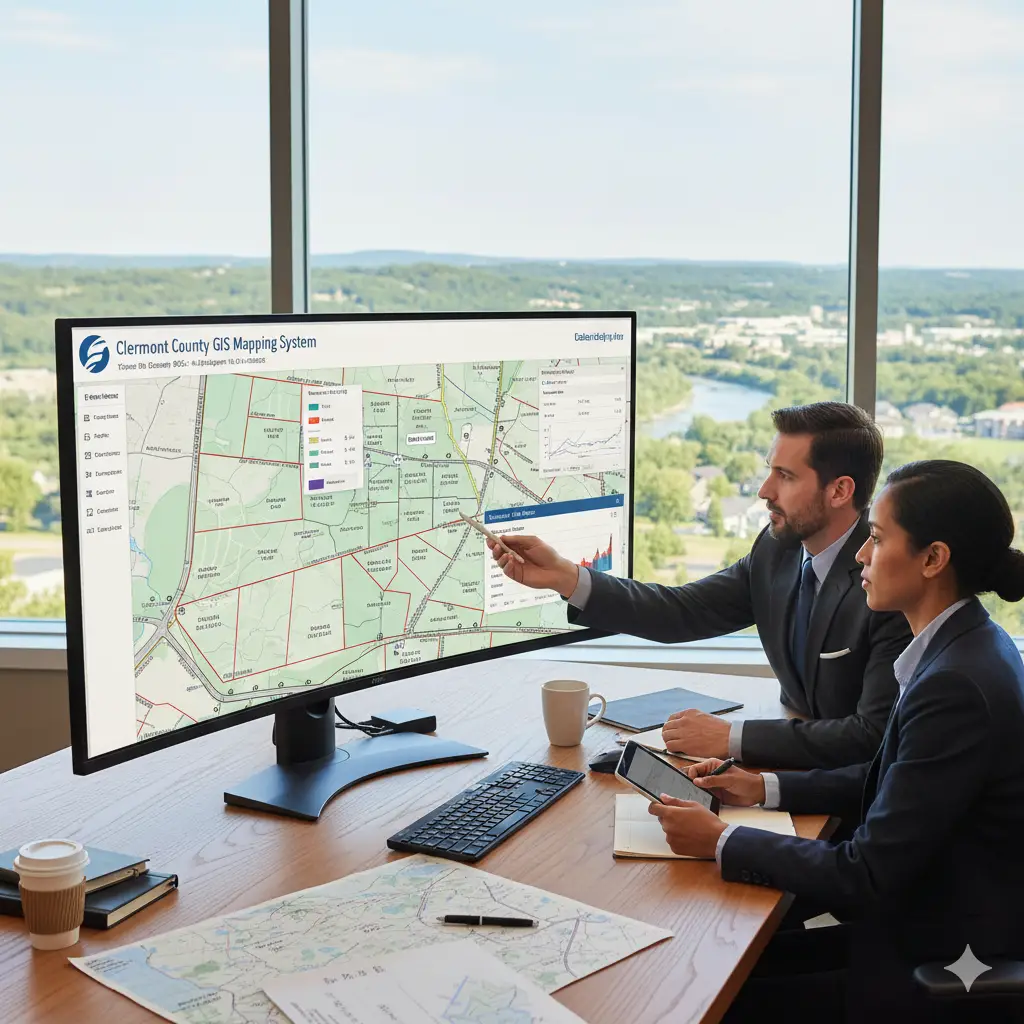
Clermont County GIS Mapping System
The GIS system allows users to visually locate parcels and review mapping-based property details. This is especially useful for land research, boundary identification, or locating rural properties.
What GIS Provides
- Parcel boundaries
- Parcel numbers
- Owner names
- Acreage
- School districts
- Aerial imagery
Users can click on any parcel to open a pop-up with key property details. From there, a direct link to the Auditor’s property page provides full records.
Property Tax Records Lookup
Real estate records often overlap with tax information. Clermont County allows users to review tax charges, due dates, payment status, and tax history.
Typical tax records include:
- Annual charges
- Assessment details
- Delinquency status
- Payment history
- Special assessments
Tax records are available through the Auditor’s tax portal and are updated with each billing cycle.
Sales and Transfer History
One of the most important parts of real estate research is understanding a property’s sale background. The Auditor lists:
- Recent sale prices
- Transfer dates
- Type of transfer
- Conveyance details
Sale history helps buyers evaluate market value, compare neighborhood pricing, and detect unusual valuation changes.
Table: Where to Find Each Type of Real Estate Record
| Type of Information | Best Source | Notes |
|---|---|---|
| Ownership details | Auditor | Updated regularly |
| Sales history | Auditor | Includes dates and prices |
| Legal deeds | Recorder | Official documents |
| Property boundaries | GIS | Visual mapping |
| Market value | Auditor | Assessed annually |
| Tax information | Auditor Tax Portal | Payment history included |
| Parcel number | Auditor or GIS | Most accurate identifier |
This table helps users choose the right system based on the type of record they need.
Why Real Estate Records Matter in 2026
With property values, tax policies, and building regulations evolving, real estate records in 2026 are more important than ever. Users rely on these records for accuracy in:
- Home buying decisions
- Refinancing and mortgages
- Land use planning
- Investment analysis
- Verifying property boundaries
- Understanding tax obligations
Having fast access to these records ensures transparency and informed decision-making.
When to Contact the Clermont County Auditor or Recorder
You may need direct county assistance if:
- A record does not appear in the online system
- You need certified copies of legal documents
- The property recently transferred ownership
- The parcel number changed after a split or merge
- Historical records are missing online
Both offices can provide manual lookups, document copies, and clarifications for special cases.
Conclusion
Clermont County real estate records are easy to access when you know which tools to use. The Auditor’s property search remains the fastest and most complete source for ownership, value, sales, and tax information. The Recorder’s office provides legal documentation, while the GIS system offers visual mapping and parcel details. Whether you are verifying a purchase, analyzing investment opportunities, or checking tax information, the 2026 lookup tools give you reliable and updated property data. With the right resources, you can perform a full real estate records lookup in just a few minutes.
Frequently Asked Questions
How can I access Clermont County real estate records for free?
You can access most records for free through the Auditor’s online search tool and GIS mapping system. Legal documents from the Recorder may require a small fee for copies.
Which is the best search method for complete real estate information?
Searching by parcel number is the most accurate, but address and owner name searches also provide full records through the Auditor’s database.
Does the Auditor website show sales prices and transfer dates?
Yes. The Auditor provides recent sale prices, transfer dates, and details about the conveyance type.
Where do I find legal deeds and historical property documents?
Legal documents such as deeds and mortgages are stored by the Clermont County Recorder and can be accessed online or requested in person.
Can I look up properties that have no physical address?
Yes. Vacant land and rural parcels can be found using the GIS map or a parcel number search on the Auditor website.